
Water Damage Restoration in San Antonio, TX
Water Damage Restoration San Antonio is a free referral line for homeowners, landlords and businesses with water spreading right now. Call to be connected with a local water damage restoration provider in San Antonio for extraction, drying and repairs, any hour of the day.
Free referral • Direct connection • Independent local crews
Free to call
Call 24/7
Independent local
You decide to hire
Notice: This site is a referral service and does not perform the work. Wet drywall dried in the first day or two can often be saved. Left longer, it usually gets torn out.
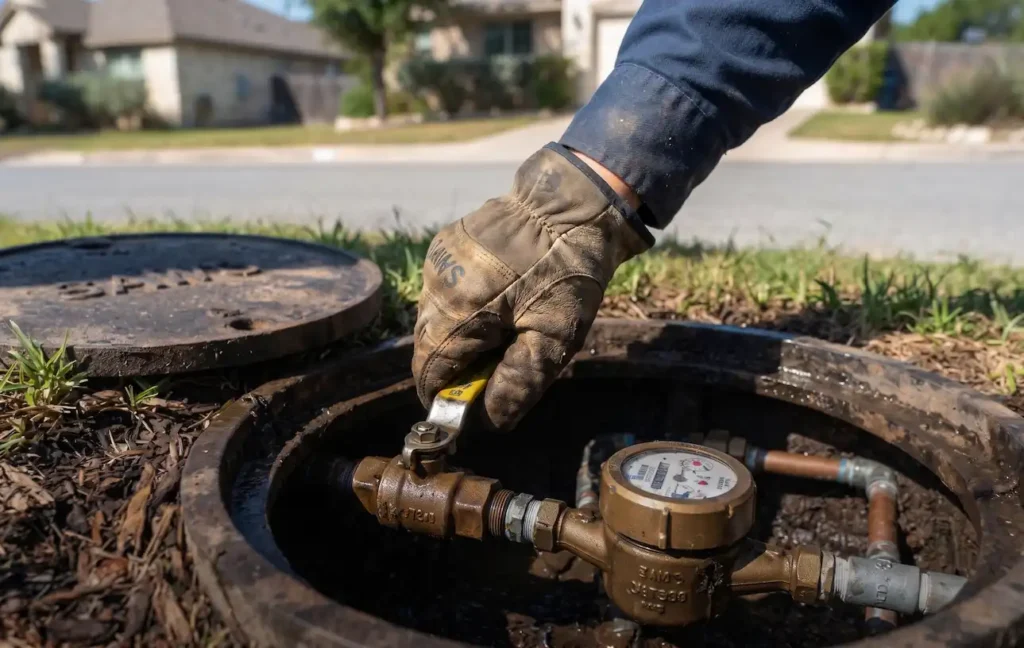
Emergency priority: shut off the customer valve at the SAWS meter box near the curb
Immediate response protocol
What to do first after water damage
Shut off the water at the main valve or the SAWS meter box, switch off power to wet rooms if the breaker panel is dry and safe to reach, photograph everything, and get drying started the same day. Mold can begin growing within 24 to 48 hours.
01
Stop the water
At the SAWS meter box near the curb, lift the lid, clear the dirt and turn the customer valve a quarter turn clockwise. If it won’t close, SAWS takes water emergencies 24/7 at 210-704-7297.
Turn clockwise
02
Make power safe
Only touch the breaker panel if you can reach it without standing in water. Otherwise, leave the room and mention it when you call.
Electrical caution
03
Document everything
Photos and video of every wet room, ceiling stains included. Keep the part that failed, like a split supply line. Your adjuster may want it.
Keep failed parts
04
Make two calls
One to reach a restoration provider, one to your insurer, because the insurer’s clock starts when you report the loss.
Start the clock
One line, three kinds of jobs
Water damage help through one call
Water Damage Restoration San Antonio routes each call to an independent provider whose service area includes the caller’s ZIP code. Independent, local providers in our network can help with three kinds of jobs:
Leaks and burst pipes
Split supply lines, slab leaks, failed water heaters, appliance and AC condensate overflows. Extraction, structural drying and repairs, covered on this page.
Full extraction and drying
Flood damage
Water from creeks, street runoff or a sewer backup. Contaminated water, so more comes out.
Mold after a leak
Growth that follows water damage, with Texas licensing rules above 25 contiguous square feet.
Local Bexar County conditions
Why water damage hits San Antonio homes differently
Most San Antonio water damage starts with one of five local conditions, and knowing which one you have tells the provider where to look.
Terrain risk 01
Flash Flood Alley
San Antonio sits inside Flash Flood Alley along the Balcones Escarpment, where Gulf air rising up the escarpment can drop heavy rain fast. Pavement and older drainage push it under doors and into ground-floor rooms.
Soil risk 02
Clay soil and slab leaks
Clay soils that swell when wet and shrink in drought stress the water lines under slab-on-grade homes. A slab leak shows up as a damp or warm patch of floor, or a water bill that jumps for no reason.
Aquifer factor 03
Hard water and water heaters
San Antonio’s water comes largely from the limestone Edwards Aquifer and is hard, which builds sediment in tank water heaters. Many sit in garages, closets or attics, where a failed tank soaks drywall unnoticed.
HVAC condensate 04
Attic AC units
When an attic air handler’s condensate line clogs during the long cooling season, it overflows into the ceiling below. The first sign is usually a brown stain.
Winter volatility 05
Rare, hard freezes
Homes built for heat run pipes through attics, exterior walls and unheated garages. The February 2021 winter storm showed how fast those lines split when a hard freeze does arrive.
Seasonal protection
Freeze season is next: protect your pipes now
San Antonio’s average first freeze arrives around November 30, and the city sees roughly 15 freezes in a typical winter. Higher ground at the Hill Country edge, like Leon Springs, Bulverde and Helotes, usually freezes weeks earlier.
Find your SAWS meter box and make sure the customer valve turns before you need it.
Insulate pipes in the attic, garage and exterior walls, and disconnect garden hoses.
On hard-freeze nights, let the indoor faucet farthest from the meter run a thin, steady stream, not just a drip.
If a pipe bursts, shut off at the meter, open faucets to drain the lines, and call before water spreads under the flooring.
Qualifying SAWS customers can get help with emergency leak repairs through the Plumbers to People program at saws.org/uplift.
Bexar utility support
IICRC S500 standard
How water damage restoration works
Water damage restoration removes the water, dries the structure to a measured standard, and repairs what can’t be saved. Most providers follow the IICRC S500 standard.
Step 01
Inspect and map
Moisture meters and thermal cameras show how far water wicked into walls, subfloor and cabinets.
Step 02
Extract water
Truck-mounted or portable extractors pull standing water from floors and carpet.
Step 03
Remove unsalvageable
Soaked pad, insulation and the bottom of the drywall often come out, especially if the water was dirty.
Step 04
Dry and dehumidify
Air movers and dehumidifiers run until daily meter readings reach a dry standard.
Step 05
Repair structure
Drywall, flooring and paint, by the same provider or a separate contractor.
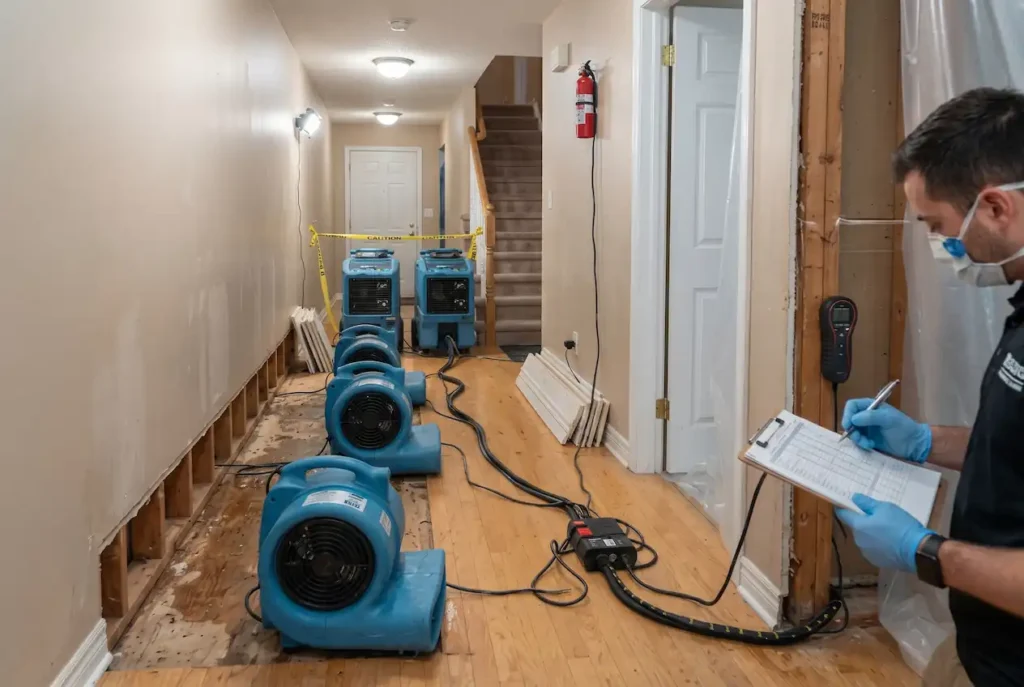
Mitigation vs restoration
Stopping damage vs. pre-loss reconstruction
Steps one through four are often called water mitigation: stopping the damage. Restoration is the repair that returns the home to its pre-loss condition. Drying usually takes several days and should end on a meter reading, not a calendar date.
The source matters: IICRC water categories
The IICRC sorts water into three categories: clean water from a supply line (Category 1), gray water from a washer or dishwasher (Category 2), and black water from sewage or floodwater (Category 3). Clean water left sitting can move up a category.
Texas insurance basics
Water damage claims in Texas: what to know first
Property damage claims in Bexar County move faster when you act early and know the state rules:
§542.055 notice
Report the same day
Under Texas Insurance Code §542.055, most insurers must acknowledge your claim, start investigating and request what they need within 15 days of receiving notice (30 business days for surplus lines insurers).
Policy clause
Sudden vs. gradual
Homeowners policies usually cover sudden, accidental water damage like a burst pipe and often exclude long-term leaks and rising floodwater.
NFIP 30-day rule
Flood is separate
Damage from rising water needs a flood policy, and new NFIP policies typically wait 30 days before coverage starts.
Direct billing
Ask about billing
Some providers bill your insurer directly; others ask you to pay and get reimbursed. Ask on the first call.
Independent network routing
Why call one line instead of ten companies
Water Damage Restoration San Antonio saves the 2 a.m. scroll through restoration companies. Tell the line where the water came from, how long it’s been wet and your ZIP code, and your call goes to an independent provider that covers your area. You talk to them directly and decide whether to hire them.
Every provider in our network is independent, so vet them the way you would any contractor. These questions take two minutes:
Credential check
Are your technicians IICRC certified?
Look for Water Damage Restoration Technician (WRT) or Applied Structural Drying (ASD). Texas doesn’t issue a statewide license for water damage restoration itself, so certification and insurance are what you have to go on.
Drying proof
How will you decide it’s dry?
The right answer is meter readings logged every day, not “when it feels dry.”
Tear-out protocol
Will I get a written scope before tear-out?
Extraction can’t wait. Demolition and drying should come with a scope you can hand to your adjuster.
TDLR licensing
If there’s mold, who handles it?
In Texas, mold covering 25 contiguous square feet or more needs a TDLR-licensed remediator. Check licenses with the TDLR license search.
Frequently asked questions
Water damage questions
Is this website a water damage restoration company?
No. Water Damage Restoration San Antonio is a free referral service. Calls are connected to independent, third-party restoration providers that serve San Antonio and Bexar County. The provider you speak with inspects the damage, quotes the job and does the work.
How fast does water damage need to be dried?
Start drying the same day. Mold can begin growing within 24 to 48 hours, and drywall, carpet pad and subfloor that stay wet past that window often have to be removed instead of dried.
Does homeowners insurance cover water damage in Texas?
It often covers sudden, accidental damage such as a burst pipe or a failed water heater. Gradual leaks and rising floodwater are commonly excluded, and flood damage needs a separate flood policy. Your policy wording decides, so call your insurer the same day.
Will I get a price before work starts?
Pricing comes from the provider after an inspection. This site does not quote prices. Emergency extraction usually can’t wait, but ask for a written scope before demolition and drying begin so you and your adjuster can review it.
Free 24/7 referral line
Water spreading right now?
Call to be connected with a local water damage restoration provider in San Antonio. Free to call, 24/7.